
Part 2 of “The Ultimate Question: Is it the Right Question for Alumni Engagement?” Series (Click to read Part 1)
Decades of alumni research have sought to answer a crucial question: what truly predicts whether an alumnus/a will remain engaged and support their alma mater over time? The Alumni Attitude Study, leveraging over 1,000,000 alumni responses, has determined that loyalty, an individual’s emotional bond and self-declared commitment to their alma mater, stands out as a strong predictor of future engagement and giving, outpacing traditional metrics like willingness to promote or event attendance.
Why Loyalty Outperforms Other Metrics 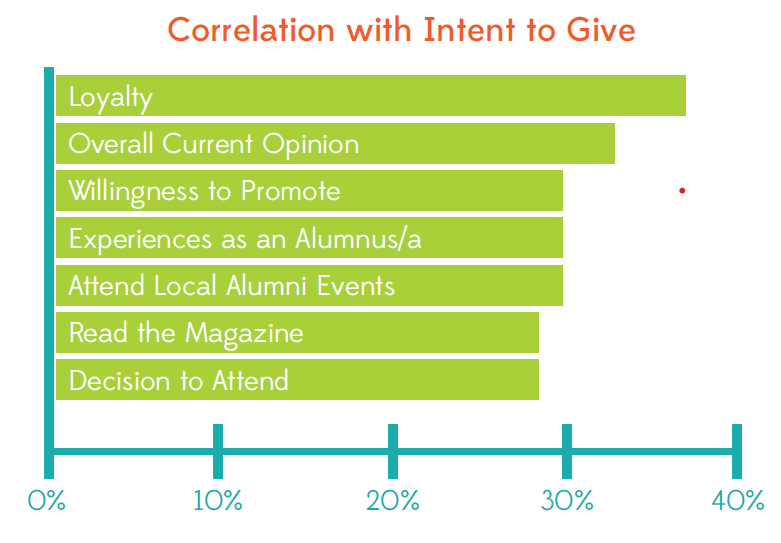
Through hundreds of surveys, the Alumni Attitude Study examined various drivers of alumni behavior, including satisfaction with the decision to attend, willingness to promote, current opinion, and personal experiences as a student. “Loyalty to the institution” consistently demonstrated the highest correlation to intent to donate, volunteer, and stay involved over the long term, regardless of when or where someone graduated.
While “relationship with the university” is a reliable proxy for loyalty, the direct loyalty question yields the most actionable insights for advancement teams overseeing fundraising and programming. Notably, alumni reporting high loyalty also tend to serve as volunteers, respond to communications, attend reunions, and become advocates within their own personal and professional networks.
The Net Loyalty Score (NLS): A New Approach
Given these findings, the Alumni Attitude Study recommends a transition from the Net Promoter Score (NPS) to the Net Loyalty Score (NLS). This means asking every alumnus/a “On a scale of 0 to 10, how would you rate your loyalty to [Institution]?”- both after events and in comprehensive alumni surveys.
Incorporating the NLS into your strategy enables multiple benefits:
-Clearer identification of high-potential donors and engaged alumni cohorts.
-Targeted stewardship and segmented outreach based on loyalty levels.
-Improved programming, messaging, and volunteer opportunities, tailored to the most loyal audiences.
Research also suggests that measuring movement in loyalty (not just static scores) offers powerful signals of direction for advancement initiatives, helping to monitor the impact of new events, leadership changes, or shifts in institutional vision.
Best Practices and Implementation Tips
To maximize the benefits of loyalty-based surveying, advancement professionals should:
-Insert the loyalty question after every on-campus or virtual event, and within larger periodic attitude assessments.
-Pair loyalty data with event attendance, magazine readership, and other engagement indicators to enhance predictive analytics.
-Customize post-event and annual appeals to highest-loyalty segments, using personalized messaging to move alumni down the pipeline from advocacy to support.
-Use trend analysis to detect early warning signs, such as declining loyalty, for adjustment of communications and engagement strategies.
For event surveys, consider the refined model used at leading alumni-focused institutions: combine satisfaction, expectations, and loyalty, but make loyalty (not recommendation) the focal metric tied to future engagement and support.
Conclusion
Alumni affinity is built on more than nostalgia; it’s rooted in loyalty and an emotional connection that transcends single interactions. By shifting from a promotional model to one centered on loyalty, colleges and universities can amplify the impact of their alumni relations, scale up programs that truly resonate, and secure lasting philanthropic support. In an era where institutional needs and philanthropic competition are high, loyalty is not just another number, it’s the foundation of a thriving alumni community and the future of advancement strategy.
For more content about alumni engagement data trends, check out our blog Alumni Insights.