
Part 3 of “The Ultimate Question: Is it the Right Question for Alumni Engagement?” Series (Click to read Part 1 or Part 2)
As higher education institutions evolve their approach to alumni engagement, measuring what truly predicts lifetime support becomes increasingly crucial. The Net Promoter Score (NPS), long a staple of the business world, asks alumni about their willingness to recommend their alma mater to others. While the NPS has strengths in transactional settings, the unique realities of higher education demand metrics that better reflect lifelong affinity and philanthropic intent.
Why the NPS Falls Short for Universities
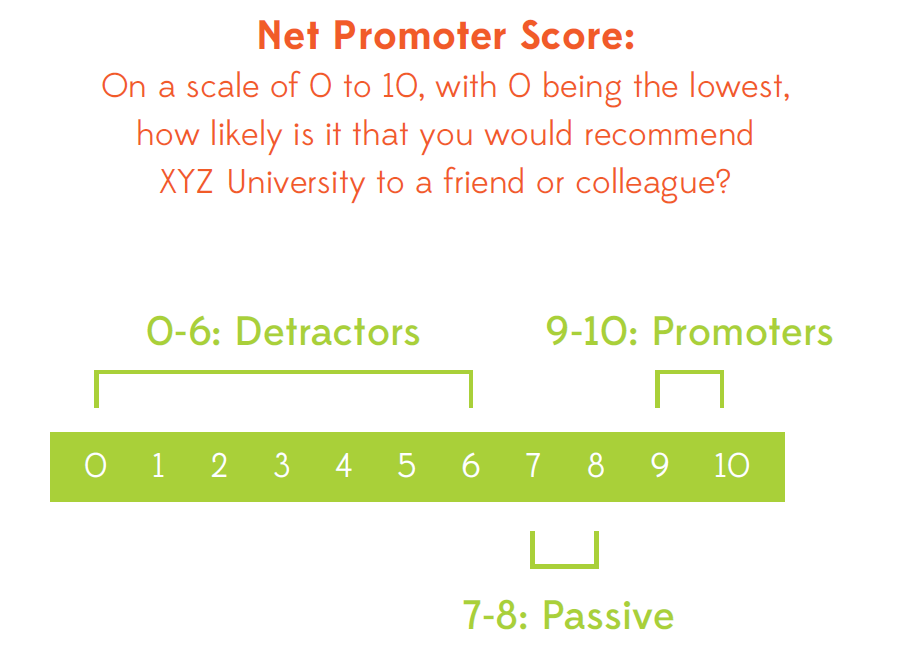
The NPS was designed by Bain Consulting to help businesses move past “bad profits,” focusing efforts on both inspiring customers and eliminating negative experiences. In its original form, the NPS divides responses on a 0–10 scale into three groups: detractors (0–6), passives (7–8), and promoters (9–10). The net score is calculated by subtracting the percentage of detractors from the percentage of promoters, providing organizations with a single loyalty measure.
For organizations like Southwest Airlines or Enterprise Rental Car, where repeat business revolves around reducing customer dissatisfaction and maximizing promoters, this model is ideal. But when this metric is transferred to universities and colleges, its predictive power diminishes. Alumni relations are not transactional, they are rooted in formative experiences, sustained connections, and evolving priorities throughout the alumni’s life journey.
The core issue: alumni maintain a lifetime connection to their institution and are deeply vested in the institution’s reputation and future. Alumni Attitude Study data shows that over 95% of alumni believe attending their alma mater was a “good” or “great” decision, with some schools reporting satisfaction rates as high as 99%. These results far exceed typical customer satisfaction scores in business and highlight the need for a different type of engagement measurement in higher education.
The Net Loyalty Score (NLS): Aligning Measurement with Mission
Instead of merely capturing willingness to promote, advancement teams should look to the Net Loyalty Score (NLS)- a metric that centers on alumni affinity, relationship, and emotional bond. Research has revealed that questions focusing on loyalty or relationship with the institution more strongly predict future giving, volunteerism, and ongoing engagement than the NPS “promotion” question does.
Scoring Methodologies: From NPS to NLS
NPS divides respondents as follows:
0–6: Detractors (score -1)
7–8: Passives (score 0)
9–10: Promoters (score +1)
But higher education needs a model that rewards affinity, not just limits damage from detractors.
Recommended NLS scoring includes: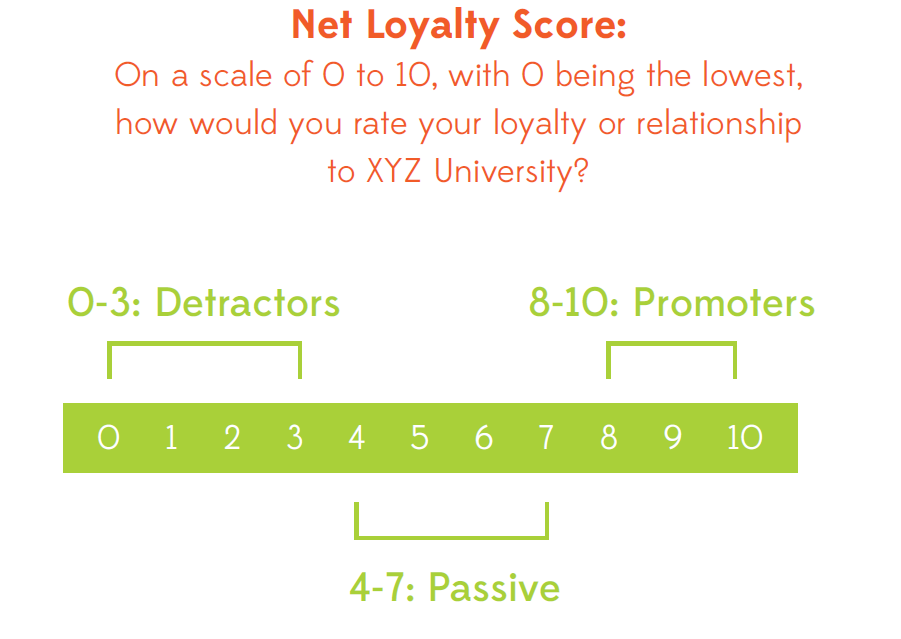
0–3: Detractors (score -1)
4–7: Passives (score 0)
8–10: Promoters (score +1)
An even more streamlined Loyalty Score, tailored by the Alumni Attitude Study, simply classifies:
0–6: Passive
7–10: Promoter (score +1)
(No negative score; focuses on building upward affinity)
This adjustment recognizes that alumni dissatisfaction, while important, represents a minor portion of the population, and advancement teams are better served by channeling resources into cultivating the broad base of satisfied alumni whose goodwill can be transformed into active engagement and giving.
Strategic Takeaways for Advancement Professionals
-Focus survey design and engagement strategies on loyalty and relationship questions, not just promotion.
-Use the NLS to identify and cultivate the most loyal alumni for stewardship, targeted campaigns, and leadership roles.
-Translate high affinity scores into programming, communications, and donor asks that leverage alumni pride and connection.
-Avoid expending outsized effort on converting the minority of dissatisfied alumni. Instead, maximize the transformation of majority goodwill into tangible support.
Conclusion
Alumni engagement is best measured by affinity, loyalty, and sustained relationship, not just promotion. As your institution moves from the NPS to the NLS, the results will offer sharper, actionable insights. This shift enables advancement teams to deploy resources where they matter most, unlocking the full potential of alumni support throughout their lives.
For more content about alumni engagement data trends, check out our blog Alumni Insights.