
A Note from Rob Shoss, President & Managing Consultant:
As I talk with advancement professionals around the country, I often hear them ask, “How do I get alumni to focus on how they can support their alma mater? Alumni need to understand that the university cannot succeed without their support.”
When I hear this, I am reminded of Jack Dutton, my boss from when I worked my first job in the natural gas industry after graduate school. He had a sign on his desk that said “Don’t tell me about what you did for me yesterday: tell me what you’re going to do for me today.” Jack was an old-school oilman, and he pointed to that sign often in the years I worked with and for him.
I think of Jack when I hear advancement professionals talk about what alumni need to do for the institution. They have it all backward in many ways. Our research shows repeatedly that alumni want to know that the value of their degree is increasing over time.
This sentiment differs depending on the institution, but the theme is consistent. This theme is actionable because alumni are similar to my friend Jack Dutton. Alumni know that the equity of their degree is a real asset, and like their other assets, it needs to be managed to provide consistent value or growth.
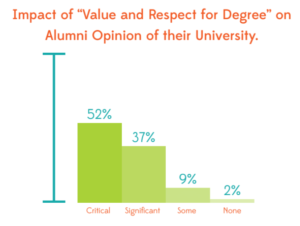
Alumni want to know what their alma mater is doing to make their degree increase in value in whatever way they define that value. The conversation they are looking for is about more than just what success the university has had or even about the great alumni who graduated from the university. Instead, alumni want to hear about how the activities of graduates increase the value of their degree. Alumni want to know what the institution is doing today or plans to do tomorrow that will help make them feel better about their decision to attend.
Based on Alumni Attitude Study results, we know that 95% of alumni feel very good about their decision to attend their alma mater, and 93% have a high current opinion of the institution they attended. What is missing is the connection between that desire to feel good about such an essential and integral decision in their lives and what they are now hearing about that affinity. Alumni want external stimuli to confirm the quality of their decision to attend that institution. Those stimuli can come from others or via well-targeted communications from the institution or, ideally, a combination of both.
The main point is that alumni want to feel like improvements are being made. They want to know that things at the institution are improving and essential to the experience of current students. It makes them feel good that current students have a meaningful experience, but they also personally benefit when recent graduates are sought after and respected. Suddenly, that diploma on the wall gets more respect, and that respect transfers directly to them.
This sentiment is especially true of younger alumni. Over and over, we see how younger alumni focus on knowing where their money is going. “What am I getting for my donation?” For the older alumni, it is often enough to know that giving to their alma mater is the right thing to do. We see a different sentiment among the younger alumni. We are still determining whether this is simply a function of age or if it is a fundamental difference between generations. The difference runs deep into the fabric of how younger alumni communicate with each other and the tools they have at their disposal to manage this communication.
We should ask “What are we doing as a university to help our graduates succeed?” The question is about something other than how our alumni can help the university. If we operate according to that sign on Jack Dutton’s desk, I suspect many more alumni will engage and stay involved.
For more content about alumni engagement data trends, check out our blog Alumni Insights.