

In the world of alumni relations, engagement is the lifeblood of sustaining connections, financial support, and community vitality. Yet, what factors drive alumni to remain active and committed over decades? New research by the Alumni Attitude Study identifies a fundamental element that shapes enduring alumni engagement: alumni perception of their preparedness for life. This blog explores why feeling prepared is one of the strongest predictors of alumni loyalty and philanthropic behavior, supported by concrete data and real-life reflections.
Why Preparedness Matters
Preparedness reflects the educational experience’s success in equipping graduates with career skills, personal development, and the mindset to navigate complex transitions. When alumni feel their alma mater effectively prepared them for life’s challenges, they view the institution not just as a place they attended, but as a partner in their long-term success. This translates into stronger emotional bonds, trust, and a willingness to “give back” through financial support, volunteering, and advocacy.
Key Data Highlights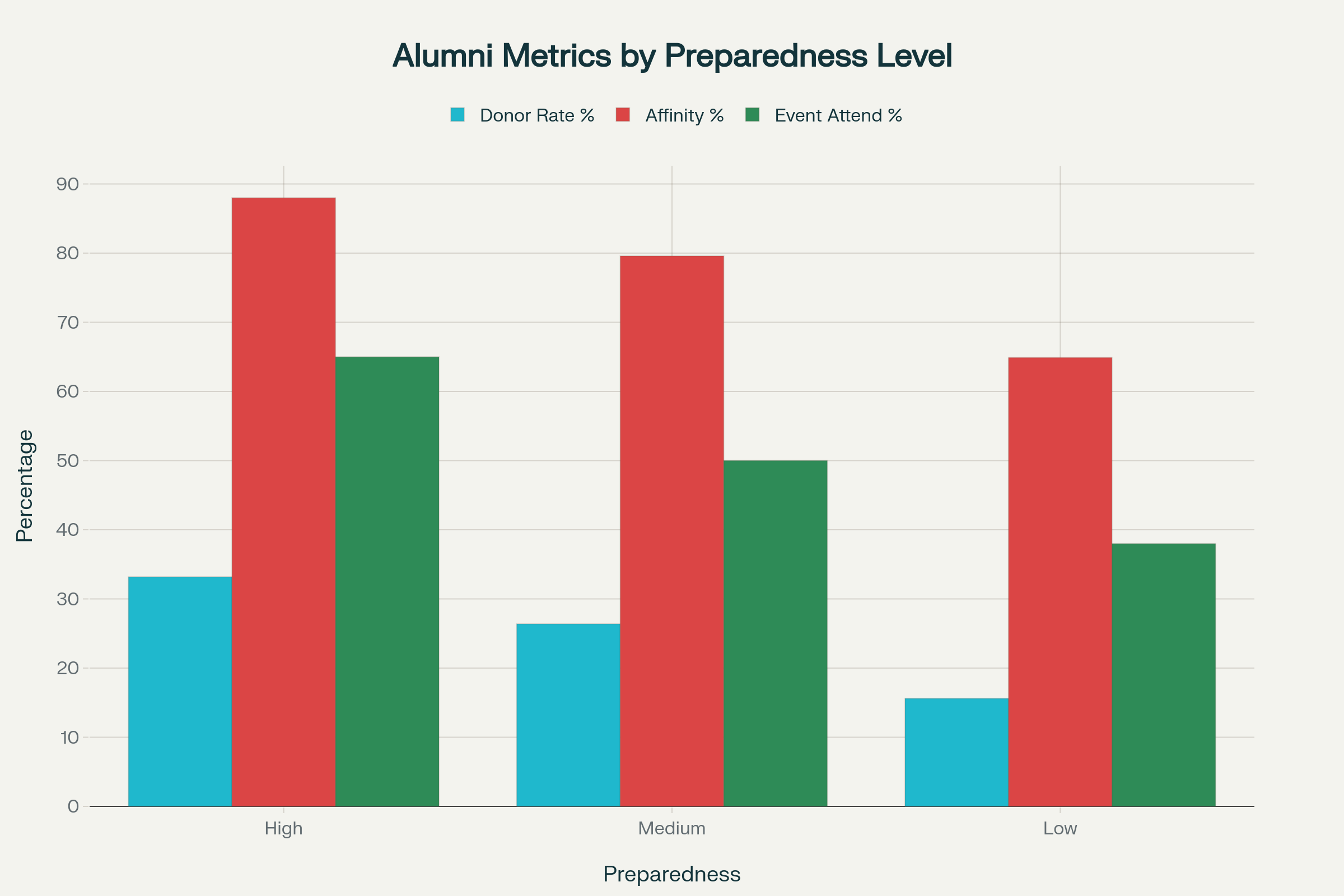

The Alumni Attitude Study’s findings offer compelling statistics to support these conclusions:
– Among alumni surveyed, 36% rated their overall preparedness above 3.5 on a 4-point scale. This group is the most engaged: they have a current donor rate of 33.2%, which is more than twice the rate of those who felt unprepared (15.6%), and boast an average affinity score of 0.880, reflecting deep connection to their institution.
– Alumni with moderate preparedness (2.5–3.5) had relatively strong engagement, but lower donor participation (26.4%) and affinity (0.796).
– The lowest preparedness group (below 2.5) comprises approximately 27% of the alumni population and trails notably on both metrics.
– Furthermore, among highly prepared graduates, 65-74% rated their preparation as “excellent” or “good” across multiple dimensions, including career readiness, graduate education prospects, and personal growth.
Engagement Beyond Gifts
Engagement extends beyond donations. The Alumni Attitude Study found that highly prepared alumni are:
– 3 times more likely to participate in mentoring programs or professional networking events.
– Nearly twice as likely to attend alumni events, with attendance rates at 65%, compared to only 38% for the least prepared.
– More engaged with communications, opening newsletters and emails at a rate of 81% versus 56% among lower-preparedness groups.
– Nearly 91% would recommend their alma mater to prospective students, compared to just 63% in the least engaged group.
These behaviors demonstrate that preparedness shapes a spectrum of alumni.
The Generational Challenge: Declining Preparedness
One concerning insight is the generational decline in preparedness scores. The oldest alumni reported the highest average preparedness score of 3.291. Meanwhile, those graduating more recently registered the lowest scores at 2.946, a significant decline of more than 10% over fifty years.
This trajectory challenges institutions to reconsider traditional approaches. As the nature of education, workforce entry, and societal conditions evolve, so must the strategies to equip students, if alumni engagement and support are to be robust across generations.
A Strategic Imperative
Preparedness is the bedrock upon which lifelong alumni loyalty and support are built. Institutions that invest in career readiness, provide mentorship, and facilitate personal growth are not only empowering their students, but also fostering a community of active, generous, and proud alumni. The evidence is clear: prioritizing preparedness today ensures the growth of a vibrant alumni network for decades to come.
For more content about alumni engagement data trends, check out our blog Alumni Insights.