

Regular alumni surveys serve as far more than routine data reports: they are multipurpose tools for building narrative, prioritizing resources, engaging alumni authentically, and fostering campus-wide unity. Rob Shoss, President and Managing Consultant, explains in the featured video below that regular alumni surveys offer three pillars of transformative value for institutions, especially those striving for meaningful, actionable engagement with alumni.
Build a Meaningful Narrative From Data
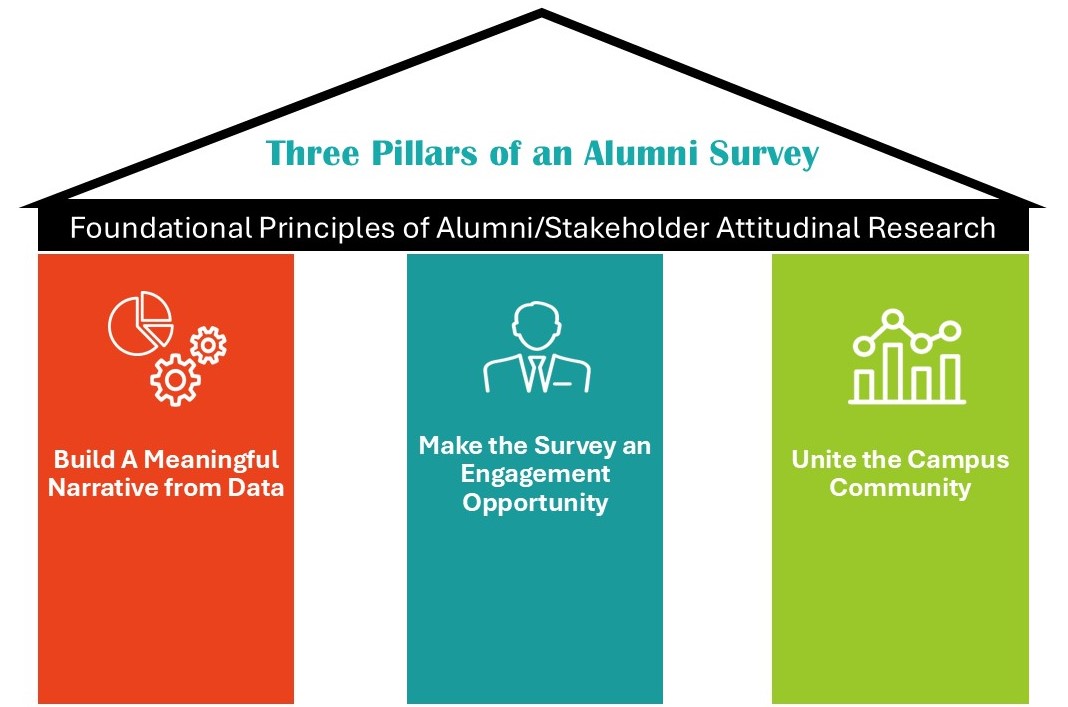

An effective alumni survey creates a compelling, data-driven narrative about what alumni truly want and what inspires them to engage. This narrative hinges on the insights gained from quantitative analysis: these scaled questions are the “meat and potatoes” that provide clear benchmarks, validate trends, and help administration understand engagement drivers. Qualitative responses, the open-ended, descriptive “flavor of the meal” add nuance and emotional dimension, surfacing motivations and ideas that numbers alone can’t show. Institutions review qualitative results after building the quantitative narrative, achieving deeper understanding and meaning from alumni voices.
This dual approach ensures institutions focus resources not on hunches, but on evidence: the survey highlights which programs, communications, and volunteer opportunities matter most, empowering staff to make strategic decisions about where to invest precious time and budget, with confidence and clarity.
Make the Survey an Engagement Opportunity
The survey process itself should never be a one-way transaction. At its heart, it’s an act of engagement by inviting alumni to share their opinions, showing them that they are valued, and then making their input count by acting on what is heard. This simple outreach builds trust, deepens connections, and prompts alumni to see themselves as part of the ongoing campus story. It’s not just about collecting data; it’s about building relationships that turn alumni into advocates, volunteers, and donors.
Sharing back survey results, describing chosen priorities, and communicating progress demonstrates responsiveness, transparency, and genuine care. This feedback loop increases alumni satisfaction and willingness to contribute, now and in the future.
Unite the Campus Community
Finally, alumni surveys provide unique value as catalysts for a campus-wide partnership and unity. Data from the survey brings the institution together around a shared understanding of what alumni contribute and why their voices matter. Offices across campus, from advancement and communications to student affairs, can harness findings to align their outreach, collaborate, and make alumni a known part of every strategic conversation.
This inclusive approach fosters a culture that appreciates alumni as vital stakeholders. With clear evidence of alumni attitudes, the institution can justify, optimize, and sometimes expand its resource allocation, securing cross-department buy-in and leadership support for the programs and communications that matter most.
As Rob Shoss highlights in the video below, alumni surveys are not just a checkbox. An alumni survey, done right, is much more than a questionnaire. It is a powerful tool for creating narrative, building relationships, fostering unity, and, most importantly, empowering institutions to make every action strategic, impactful, and truly meaningful for both alumni and the institution.

For more content about alumni engagement data trends, check out our blog Alumni Insights.