

Part 3 of “Rethinking Alumni Strategy: Why Engagement and Giving Belong on the Same Map” Series (Click here for Part 1 and Part 2)
When you combine alumni engagement behaviors with giving patterns, you see clear clusters, rather than a smooth continuum. In earlier posts in this series, the Alumni Attitude Study showed how combining engagement behaviors with giving status creates four distinct groups: high engagement / high giving, high engagement / low giving, low engagement / high giving, and low engagement / low giving.
That simple map helps advancement leaders see where alumni are today and how to move more of them toward deeper engagement and more sustainable philanthropy. In Part 2, we focused on the two low engagement quadrants and explored how institutions can rebuild relevance and broaden relationships before asking for more.
Now, we take a closer look at the two high engagement quadrants: high engagement / low giving and high engagement / high giving. These groups are already paying attention, participating, and staying connected, but they still represent two very different opportunities for advancement teams.
Data from the Alumni Attitude Study confirms that alumni in each quadrant think, feel, and behave differently. Institutions that plan around these four groups, rather than a single “average alumnus,” are better positioned to respect alumni motivations, allocate scarce staff time, and grow both engagement and giving over time.
Taken together, these quadrants form a practical ladder: 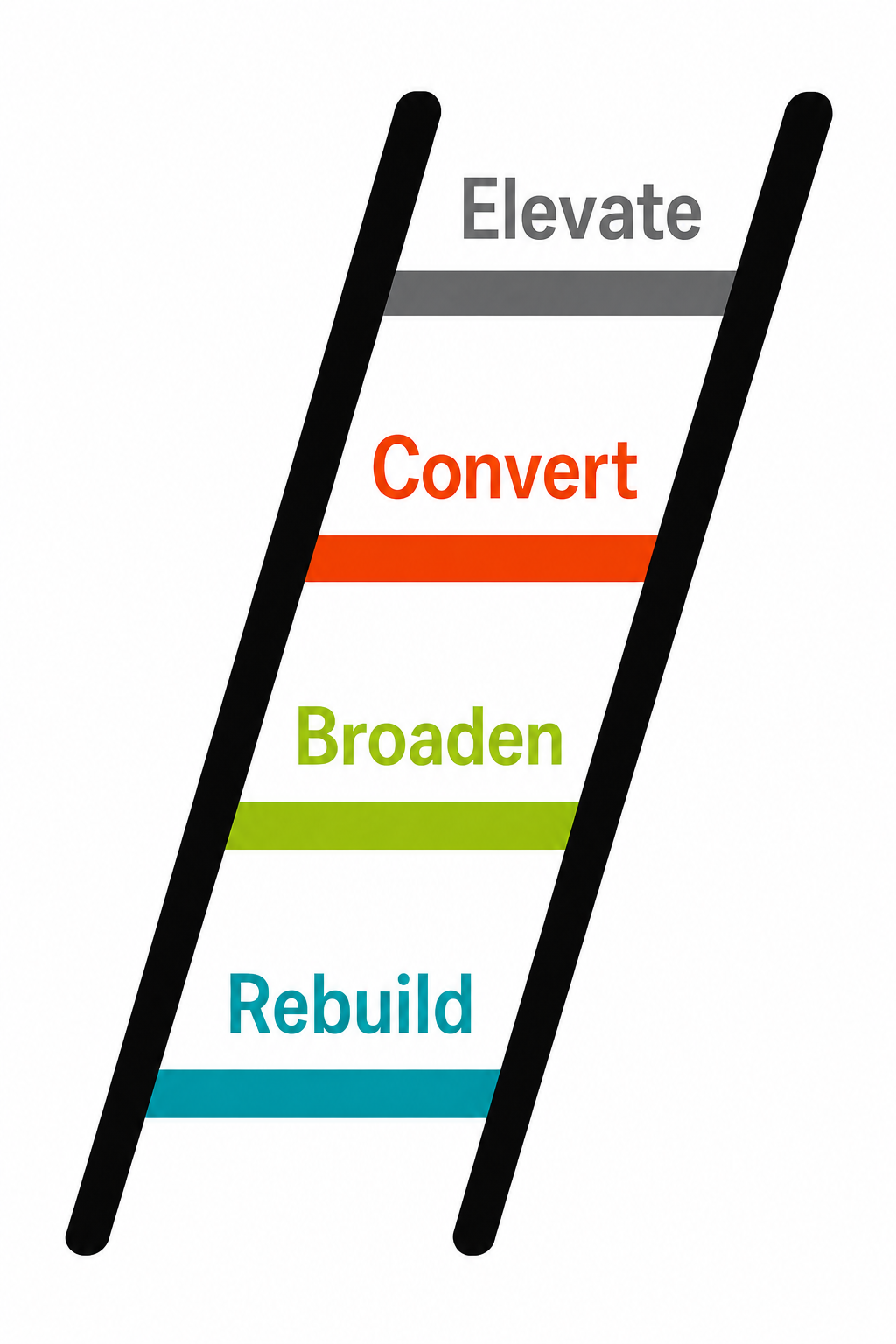

Rebuild – Low engagement / low giving, where the immediate goal is renewed contact and relevance, not revenue.
Broaden – Low engagement / high giving, extending the relationship beyond the gift.
Convert – High engagement / low giving, turning strong engagement into sustainable philanthropy.
Elevate – High engagement / high giving, moving from donors to leaders and partners.
Here, we focus on the Convert and Elevate quadrants and what they mean for your next steps.
Convert: High Engagement / Low Giving
High engagement / low giving alumni are some of the most promising alumni in your pipeline. They attend events, volunteer, stay in touch, and pay attention to what is happening at the institution. Their attitudes and behaviors suggest they care about their alma mater, but that connection has not yet translated into philanthropy.
In many cases, this is not a lack of interest. Some of these alumni may feel that their time and participation are already meaningful contributions. Others may be early in their careers, unsure whether their gift would matter, or unconvinced that current giving appeals reflect what they value most. Those distinctions matter because this is not a disengagement problem; it is an alignment problem.
For this group, a generic annual giving ask can miss the mark. The work here is converting strong engagement into financial support by connecting giving to the parts of the institution they already care about.
Practical moves for high engagement / low giving alumni:
-Connect giving to the experiences they already value, such as volunteering, mentoring, student support, or affinity-based activities.
-Use specific, right-sized asks that make clear how even a modest gift can extend the impact of their involvement.
-Emphasize participation and collective impact so alumni see that their gift counts, even if it is not large.
-Thank them for both their time and attention, helping philanthropy feel like a natural next step rather than a separate request.
The goal is not to rush these alumni into bigger asks before they are ready. It is to create a clear, credible bridge between engagement and giving so their philanthropic habits can begin to catch up with the strength of their connection.
Elevate: High Engagement / High Giving
High engagement / high giving alumni are the clearest example of what institutions hope to build. They participate, pay attention, advocate for the institution, and invest financially. They often serve as volunteers, mentors, and ambassadors, showing that engagement and philanthropy can reinforce each other over time.
Still, this group should not be treated as “finished.” Alumni in this quadrant are not simply reliable donors; they are potential partners in the future of the institution. The opportunity is not just to retain them, but to deepen the relationship so they move from loyal supporters to active leaders.
For this quadrant, the priority is to elevate the relationship beyond ongoing participation and annual support. Done well, that shift can open the door to leadership giving, strategic volunteerism, and deeper long-term commitment.
Strategies for high engagement / high giving alumni:
-Offer meaningful leadership roles, such as campaign committees, advisory groups, mentoring networks, or affinity-based boards.
-Provide high-touch stewardship that clearly shows the impact of their support and recognizes the full scope of their involvement.
-Invite values-based conversations about future priorities, including multi-year commitments, special projects, or legacy giving.
-Connect them with other highly committed alumni so their sense of belonging grows within a community, not just through one-to-one staff relationships.
The main risk with this group is assuming that continued support will take care of itself. If the relationship becomes too routine or transactional, institutions may miss the chance to turn strong donors into long-term partners and champions.
The Big Picture
Looking across institutions, the exact size of each quadrant shifts, but the pattern holds: alumni are not all at the same stage, and they do not need the same next step. When advancement teams design around the Convert and Elevate groups on the ladder, they create more intentional pathways for engaged alumni to deepen their philanthropic commitment over time.
Taken together with the earlier Rebuild and Broaden quadrants, this framework offers a more useful way to understand alumni relationships and coordinate engagement and giving strategies around them.
For more content about alumni engagement data trends, check out our blog Alumni Insights.